Equipment, depreciation and capital allowances, sorted
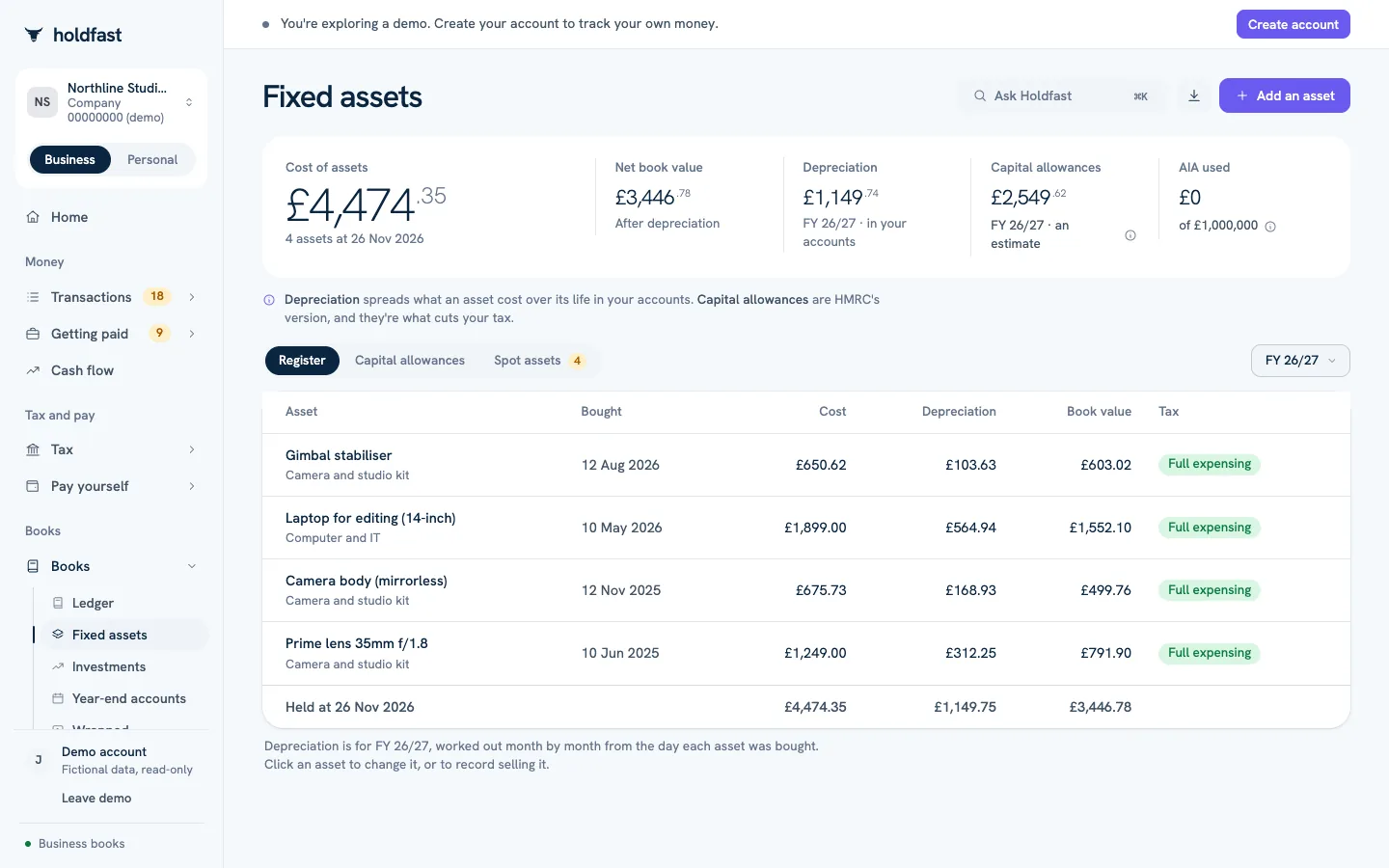
Keep a register of what your business owns. Holdfast works out depreciation for your accounts and UK capital allowances for tax side by side, with pools carried forward from one period to the next.
How it works
- Add the asset
Record what you bought, when and for how much, or let Holdfast spot equipment purchases in your bank.
- Choose how it wears out
Pick straight line over a number of years or reducing balance, down to a value you set.
- See both views
Depreciation for the accounts and capital allowances for tax, worked out per accounting period.
What you get
- Capital allowances by the rules
- Annual Investment Allowance, main and special rate pools, small pools and first-year allowances, all on HMRC's current rules.
- Companies and sole traders
- Full expensing for companies, and the right periods for a company or a sole trader.
- Odd-length periods
- Shorter or longer accounting periods scale the allowances, and long company periods are split as the law requires.
- Selling an asset
- See the profit or loss against book value, and the balancing charge or allowance for tax.
- Cars treated properly
- Cars go to the right pool by their emissions.
- Purchases spotted
- Holdfast suggests bank payments that look like equipment, and you can skip ones that aren't.
Who it's for
Questions
What is the difference between depreciation and capital allowances?
Depreciation spreads the cost in your accounts. For tax, HMRC adds it back and you deduct capital allowances instead.
Can I use capital allowances on the cash basis?
Generally only for cars. Holdfast knows when your books are on the cash basis.
Should I check the figures?
Yes. Every figure is an estimate from your records, so check it before you file. Holdfast flags anything it can't settle.