The £1,000 trading allowance explained
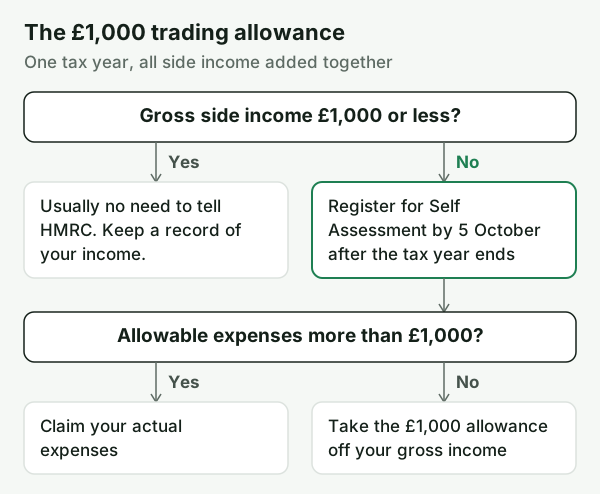
The first £1,000 of gross side income each tax year is tax-free, and below it you usually don't need to tell HMRC. Above it, pick the allowance or expenses.
The trading allowance lets you earn up to £1,000 a year from self-employment or side income without paying tax on it. If your gross income from it is £1,000 or less in a tax year, you usually don't need to tell HMRC at all.
If you earn more than £1,000, you must register for Self Assessment. You can then either take £1,000 off your income or claim your actual expenses, whichever saves more. This guide covers 2025/26 and 2026/27, when the allowance is £1,000.
What income it covers
The allowance applies to trading income from:
- self-employment
- casual services, such as babysitting or gardening
- hiring out personal equipment, such as power tools
That includes selling things you made or bought to resell, and money from creating online content. If you're a creator, our guide to how influencers pay tax in the UK covers brand deals and gifted products too.
Selling your own unwanted belongings is different. HMRC says you probably won't need to tell it about that or pay tax, however many items you sell.
There's a separate £1,000 property allowance for property income. If you have both kinds of income, you get £1,000 for each.
It's gross income, not profit
The £1,000 limit is measured on your gross income: the total you'd put on a tax return before any costs come off. £1,500 of sales with £600 of costs is over the limit, even though you only made £900.
It's also one allowance per person, not per hustle. Everything you earn from different side hustles is added together.
If you earn £1,000 or less
You don't need to tell HMRC, unless:
- you can't use the allowance (see below), or
- you need to send a tax return for another reason
You must still keep a record of what you earned. You may also want to file a return anyway if you made a loss and want to claim relief for it.
If you earn more than £1,000
You must register for Self Assessment by 5 October after the end of the tax year. For income in 2025/26 that was 5 October 2026. For 2026/27 it will be 5 October 2027. The online return and any tax are due by 31 January after that. Our guide to the Self Assessment deadline has the full list.
On your return you then choose one of two options:
- Take the £1,000 allowance off your gross income. You can't claim any expenses as well.
- Claim your actual allowable expenses instead.
The allowance can't create a loss. You can deduct up to £1,000, but no more than your income.
Worked examples: allowance or expenses?
Both examples assume the person has a job that already uses their Personal Allowance, so their side profit is taxed at the basic rate of 20%.
Aisha walks dogs at weekends. She earns £1,600 in 2026/27 and her costs are £200 (leads, bags and a bit of insurance).
- With the allowance: £1,600 minus £1,000 = £600 taxable. Tax at 20% is £120.
- With expenses: £1,600 minus £200 = £1,400 taxable. Tax at 20% is £280.
The allowance saves Aisha £160.
Ben sells furniture he restores. He earns £5,000 and spends £2,500 on materials and tools.
- With the allowance: £5,000 minus £1,000 = £4,000 taxable. Tax at 20% is £800.
- With expenses: £5,000 minus £2,500 = £2,500 taxable. Tax at 20% is £500.
Claiming expenses saves Ben £300. The rule of thumb: if your costs are more than £1,000, claim them. Our guide to what expenses you can claim as a sole trader shows what counts.
Neither of them pays Class 4 National Insurance, because that only starts once self-employed profit goes over £12,570.
To see the tax on a bigger self-employed profit, use the sole trader take-home calculator.
Who can't use it
You can't use the trading or property allowance in a tax year if you have trading or property income from:
- a company you, or someone connected to you, owns or controls
- a partnership where you, or someone connected to you, are a partner
- your employer, or your spouse's or civil partner's employer
The trading allowance also doesn't apply to your share of a partnership's trading income.
Online platforms report to HMRC
If you sell goods or services through a website or app, the platform may need to collect your details and report them to HMRC. A report doesn't mean you owe tax. It's still worth keeping your own record of what you earned so the figures match.
The allowance is rising to £3,000 from April 2027
At the Budget on 28 October 2026, the government announced that the trading allowance will rise from £1,000 to £3,000 from 6 April 2027, for the 2027/28 tax year onwards. The Self Assessment reporting threshold for trading income goes up to £3,000 too. The change is being made through the Finance Bill 2026-27.
Until then, the limit is still £1,000. If you earn more than that in 2026/27, you still need to tell HMRC.
How Holdfast helps
Holdfast compares the £1,000 allowance with your real expenses and uses whichever leaves you less tax, then shows the result on your SA103 self-employment pages, box by box, for you to copy into HMRC's online return. It also sorts your income and costs as they come in, with receipts and invoices kept alongside. The trading and property allowances help article explains how it picks.
Questions
Is the £1,000 trading allowance per side hustle?
No. You get one £1,000 trading allowance a year in total. Income from all your side hustles is added together, so £800 from content and £500 from selling crafts is £1,300, which is over the limit.
Is the £1,000 before or after expenses?
Before. The allowance is measured against your gross income, the total you earn before any costs come off. £1,500 of sales with £600 of costs is over the limit, even though the profit is £900.
Do I pay tax on things I sell on eBay or Vinted?
Not usually, if you are selling your own unwanted belongings. HMRC says you probably won't need to tell it or pay tax on that, however many items you sell. Buying things to resell, or making things to sell, is likely to be trading.
Sources
- www.gov.uk/guidance/tax-free-allowances-on-property-and-trading-income
- www.gov.uk/government/publications/selling-online-and-paying-taxes/selling-online-and-paying-taxes-information-sheet
- www.gov.uk/expenses-if-youre-self-employed
- www.gov.uk/set-up-business
- www.gov.uk/self-assessment-tax-returns/deadlines
- www.gov.uk/government/publications/income-tax-increasing-the-trading-allowance/increasing-the-trading-allowance
- taxhelpforhustles.campaign.gov.uk/
This guide is general information, not financial, tax or legal advice. Tax rules change, so check GOV.UK or ask HMRC if you're unsure. Read our terms.
Try it and read more
- Sole trader take-home pay calculator 2026/27Free calculator
- The £1,000 trading and property allowancesHow the two £1,000 tax-free allowances work, when you don't need to tell HMRC, and how Holdfast picks the better option for you.
- Do I need to file a Self Assessment return?Who has to send HMRC a Self Assessment return, the income that can mean you need one, and how to register by 5 October.
- Your Self Assessment returnHow Holdfast estimates your Self Assessment tax, builds your return with every step explained, and lists what needs a look.
More sole traders guides
- Cash basis vs traditional accounting for sole tradersSince 2024/25 cash basis is the default for sole traders: you count money when it arrives or leaves. How it compares with traditional accounting and opting out.
- How to register as self-employed in the UKYou must register as self-employed once you earn over £1,000 in a tax year, by 5 October after that year ends. How to register, what you get and what's next.
- Platforms reporting your sales to HMRC: what it means for side hustlesSince January 2024 selling platforms report seller details and income to HMRC each January. A report isn't a tax bill: you only owe tax if you're trading.
- Simplified expenses for mileage, working from home and living at your premisesFor 2026/27 sole traders can claim 55p a mile for the first 10,000 business miles, £10 to £26 a month for working from home, and flat rates for living on site.